


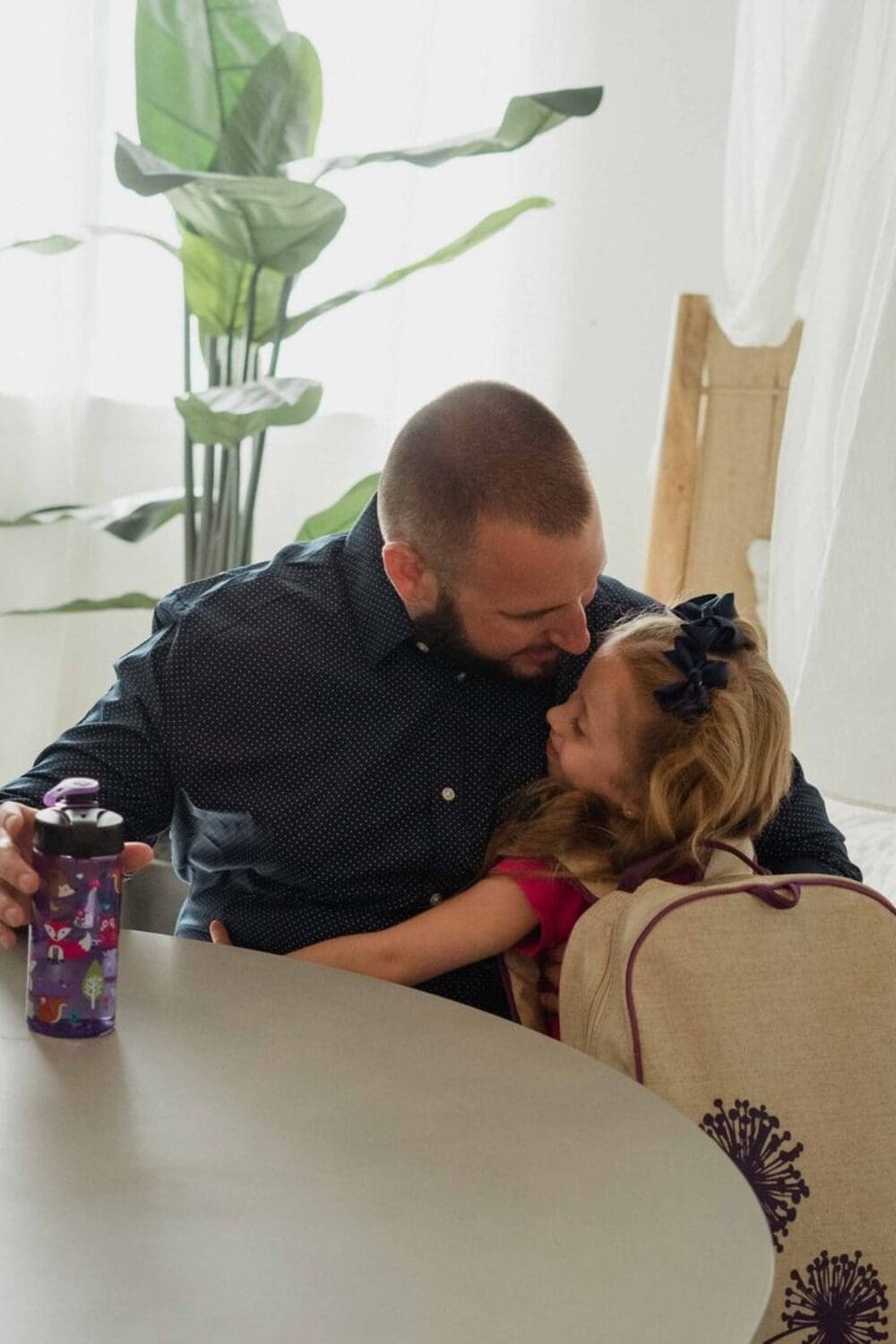


They held it together all day. Now they’re home with you, and it all comes out. Here’s why after-school meltdowns happen, and how to make that first hour home easier on everyone.
The teacher said it was a great day. So why is your child sobbing over a broken granola bar ten minutes after walking in the door?
Maybe you’ve been looking forward to seeing them all afternoon. Then the door bursts open, the backpack hits the floor, and within minutes a shoe is flying, a sibling is getting shoved, or someone is in tears because you said “not right now.”
And you’re left standing in the kitchen wondering, What happened? They were fine at pickup.
If this is your house, you’re not alone. After-school meltdowns are one of the most common things parents bring to coaching, and they show up at every age, from toddlers at daycare pickup to big kids getting off the bus.
What’s Really Going On: After-School Restraint Collapse
Parent educator Andrea Loewen Nair has a name for this: after-school restraint collapse.
All day long, your child is working hard. Following directions. Waiting their turn. Sitting still. Managing noise, transitions, and friendships. Keeping big feelings tucked away, because school doesn’t feel like the place to let them out.
That takes real effort. By the end of the day, the tank is empty.
Then they get home, to the place and the person where they feel safest, and everything they’ve been holding finally lets go.
I know it doesn’t feel like a compliment in the moment. But a child who falls apart with you is often a child who trusts that you can handle it.
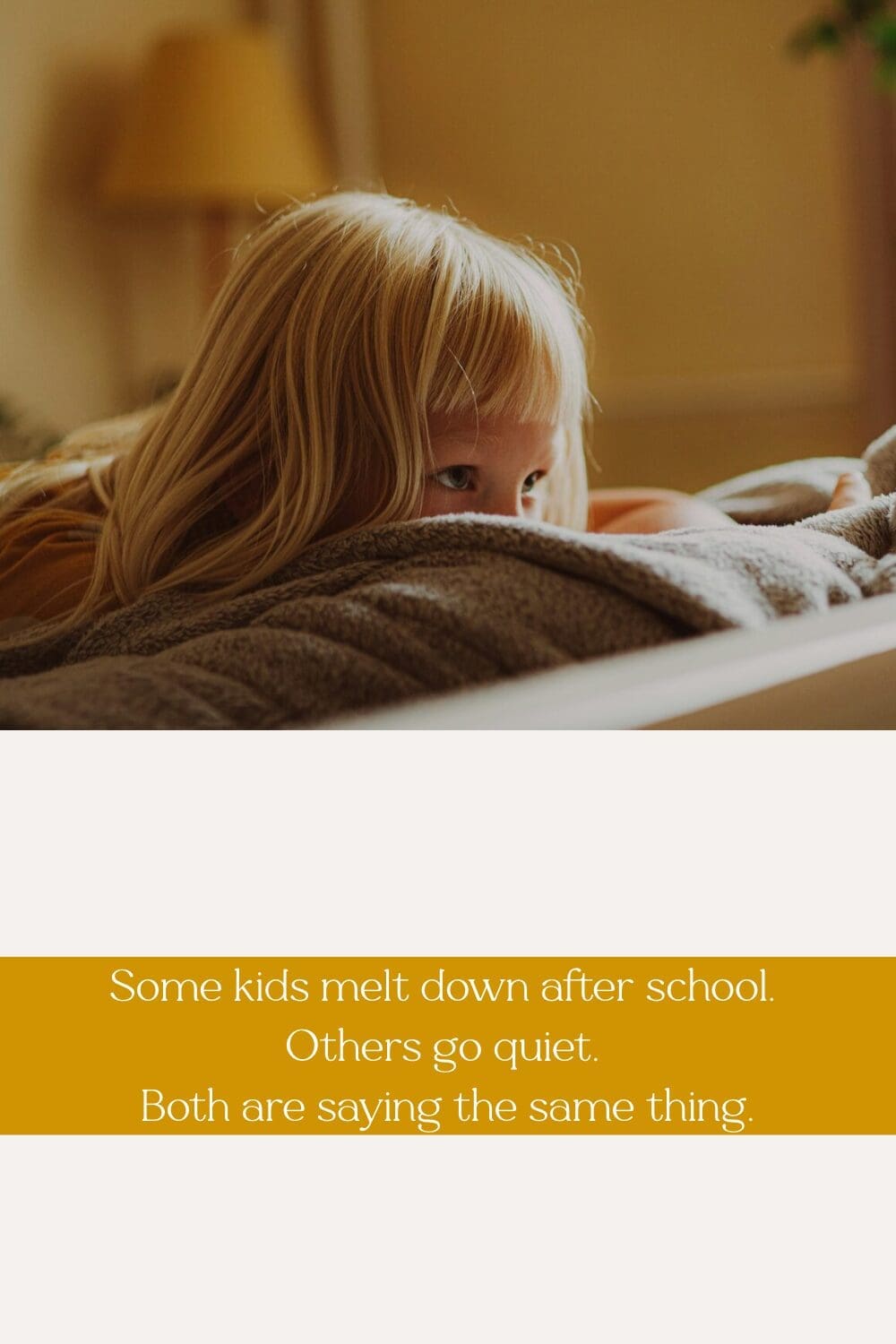
For sensitive kids, and for kids who work extra hard to keep up with the sounds, demands, and social rules of a school day, the collapse can be bigger. They’ve been holding more.
If you want a deeper look at what’s happening in a child’s brain and body during a meltdown, my post Understanding Your Child’s Big Feelings: It’s Not Bad Behavior. It’s Biology. walks you through it.
Behavior Is Always the Message
This is where the A in my CALM Framework comes in: Ask what the behavior is saying.
When your child’s nervous system shifts into protection mode, behavior becomes the way they tell you something isn’t okay. After-school meltdowns often sound like this:
- Crying over something small: “I’ve been holding this in all day.”
- Snapping at a sibling: “I have nothing left.”
- Saying no to everything: “I need a break from being told what to do.”
- Following you from room to room: “I missed you. Are we still okay?”
- Disappearing into their room: “I need quiet before I can be with anyone.”
Each of these is information. So instead of asking yourself, “How do I stop this?” try asking, What is my child’s nervous system trying to tell me?
Most of the time, the answer is some mix of the basics: hungry, tired, overstimulated, and missing you. Meet those needs first, and a lot of the behavior settles on its own.
What It Looks Like at Different Ages
Ages 0–5: The collapse often shows up at daycare or preschool pickup. Tears, going boneless, fighting the car seat, or melting down because the snack is the wrong one. Little ones have even fewer words for “today was a lot,” so their bodies say it for them.
Ages 6–12: Bigger kids might come home short-tempered, pick fights with siblings, push back on homework, or close the door and stay there. Some hold it together right up until a parent asks one question too many.
What This Looks Like at My House
When my kids were younger, I remember them coming home from daycare and just crying over everything.
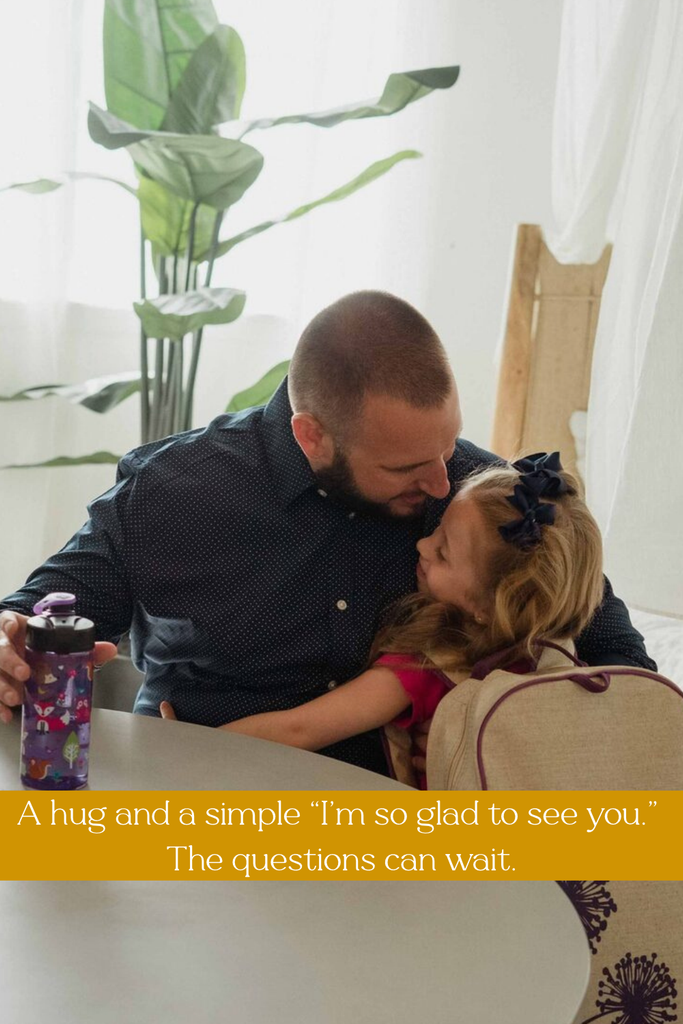
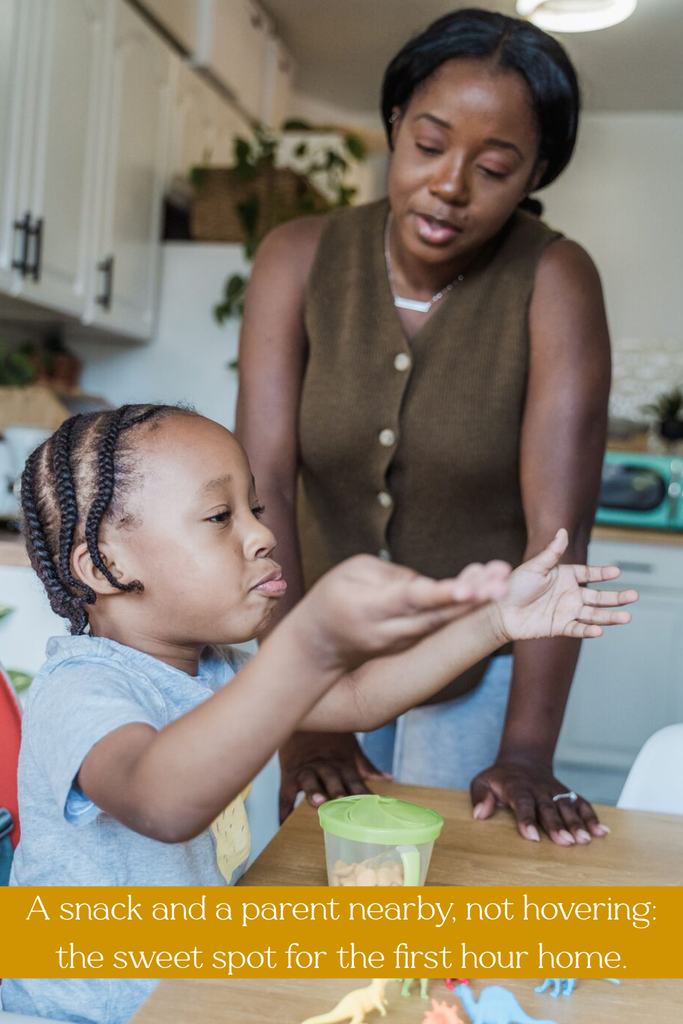
Now that they’re older, our after-school rhythm looks different. If I’m available when they get home, I greet them with a hug and let them know I’m glad to see them. Then I let them be. They grab themselves a snack and usually get some uninterrupted down time. If I’m not available when they walk in, I make sure to greet them as soon as I am.
What we don’t do is jump right into “How was your day?” Those conversations usually happen around dinner time, and some nights not until bedtime. And that’s okay.
What to Try: A Simple After-School Landing Routine
- Start with your own breath. In CALM, C always comes first: Connect to yourself first. Before pickup or before the door opens, take one slow breath, longer out than in. You’re walking into the hardest hour of their day, so start steady.
- Greet with warmth, not questions. A hug, a smile, and “I’m so glad to see you.” That’s all for now. These small moments of connection count more than you might think, and they don’t require extra time you don’t have.
- Feed the body, then protect some quiet. Keep a snack and water easy to grab. Then give them some uninterrupted down time before homework, chores, or activities.
- Save the questions for later. “How was your day?” can wait for dinner, the car ride to practice, or bedtime. Kids often share more once their body has had a chance to settle.
- If it falls apart anyway, get curious. Start with what you see: “I notice your body had a really long day.” Research with adults has found that putting a feeling into words can turn down the brain’s alarm response (Lieberman et al., 2007). You can still hold the limit while you stay close: “You’re so tired. I won’t let you hit. I’m right here.” That’s what being firm and kind at the same time looks like. The lesson about hitting can wait until everyone is calm. Connect now, teach later.
A Note for the Hard Days
Some days you’ll be on a work call when the bus pulls up. Some days you’ll ask “How was your day?” out of pure habit and get a slammed door in return. Some days you’ll snap right back.
That’s okay. You don’t need a perfect after-school routine. If you lose your cool, go back to C, steady yourself, and repair: “I was short with you earlier. I’m sorry. I’m really glad you’re home.”
Repair is the skill. Perfection was never the goal.
After-school meltdowns aren’t a sign that your child had a bad day or that you’re doing something wrong. They’re a message: I held it together as long as I could, and now I’m home with you.

Is the after-school hour the hardest part of your day right now? You don’t have to figure it out alone. Book a free 30-minute consult, and we’ll talk through what’s happening in your home and what might help. No pressure, just a real conversation.
And if you want all four CALM steps in one place, grab my free guide, From Chaos to Cooperation: The CALM Framework for when no one is listening.


