


Why Boring Routines Are the Most Powerful Thing You Can Offer Your Child
Sep 30


It’s not about doing more. It’s about doing the same thing, reliably.
Your child’s nervous system is asking one question, all day long: Am I safe right now?
Picture the morning where everything goes sideways. The cereal is wrong. The socks feel funny. The meltdown starts before you’ve even had your coffee. You didn’t change anything. But something still feels off.
Now picture the morning where everything just flows. Not because you planned something special. Because it was exactly like yesterday.
That’s not luck. That’s what predictable routines do for your child’s nervous system.
Safety Is a Feeling the Brain Recognizes by Pattern
The brain doesn’t decide if something is safe based on logic. It decides based on pattern recognition. A familiar sequence, at a familiar time, with familiar people sends a message to the nervous system long before the thinking brain has even processed what’s happening.
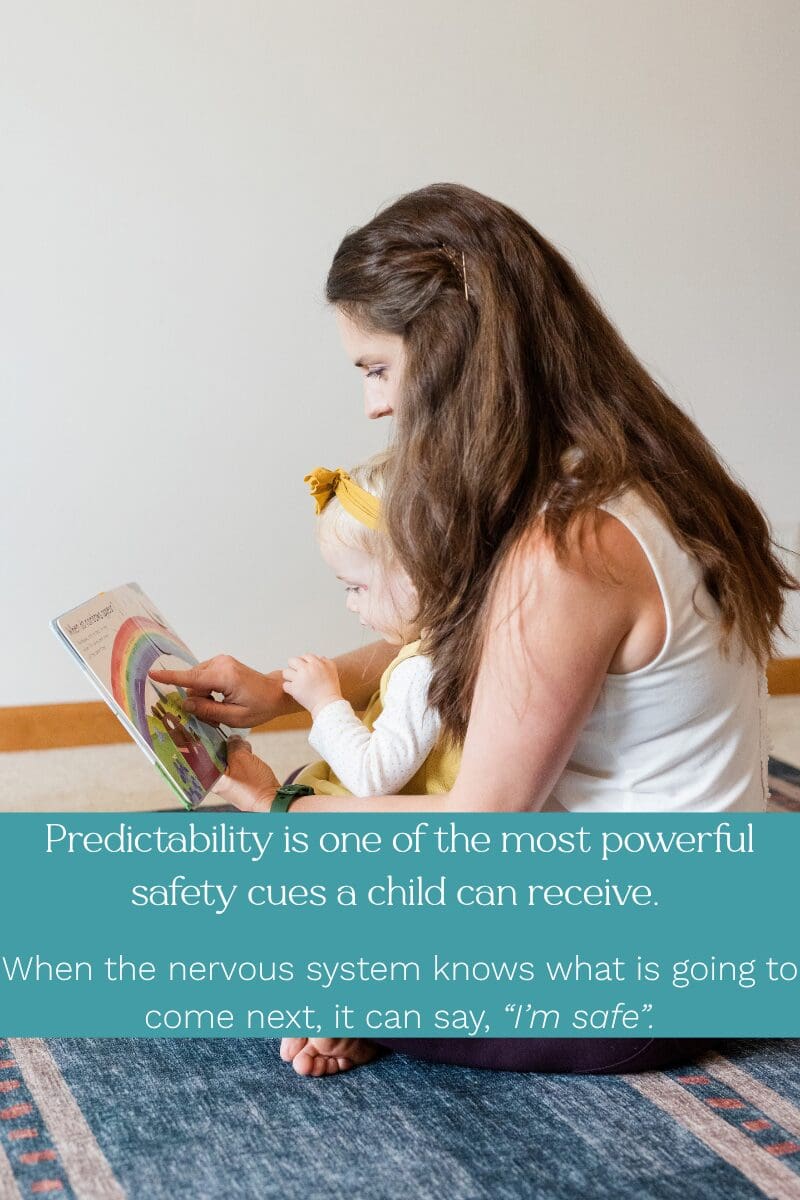
Dr. Stephen Porges calls this neuroception: the automatic, unconscious process by which the nervous system scans for cues of safety or threat. And predictability is one of the most powerful safety cues a child can receive. Not fun. Not stimulating. Predictable.
When the same thing happens at the same time in the same order, the nervous system registers: this is familiar, I know what comes next, I’m okay. That recognition is not a thought. It’s a felt sense of safety in the body. And it happens before your child says a single word.
What Happens When the Pattern Is Missing
When routines are inconsistent or absent, the nervous system stays in scanning mode. It’s still asking the question, Am I safe?, and not finding the answer it needs. That shows up as:
- Clinginess and separation anxiety
- Meltdowns over things that seem small or random
- Difficulty transitioning between activities
- A child who seems chronically wound up, irritable, or hard to settle
None of these are behavior problems. They’re a nervous system signaling that it hasn’t found the pattern it was looking for.
The behavior isn’t the problem. The missing safety signal is.
The Boring Is the Point
Here’s what most parents don’t hear often enough: the goal isn’t a good routine. The goal is a predictable one. Not Instagram-worthy. Not creative or enriching. Predictable.
Same breakfast. Same order in the morning. Same words at transition time. Same steps at bedtime. The repetition isn’t lazy parenting. It’s the message your child’s nervous system needs to receive over and over: this is familiar, I know what comes next, I’m okay.
When parents feel pressure to keep things fresh and varied and exciting, they often unknowingly remove the very thing their child’s nervous system is counting on. Novelty is stimulating. Predictability is regulating. Your child needs both, but they need predictability as the foundation first.
Your Nervous System Needs This Too
This one often surprises parents: predictable routines regulate your nervous system too.
When you know what’s coming in your day, you have more capacity. You’re less reactive. You have more room to co-regulate, to stay the steady presence when things get hard, to respond instead of react. Structure isn’t just support for your child. It’s infrastructure for the whole family’s regulation.
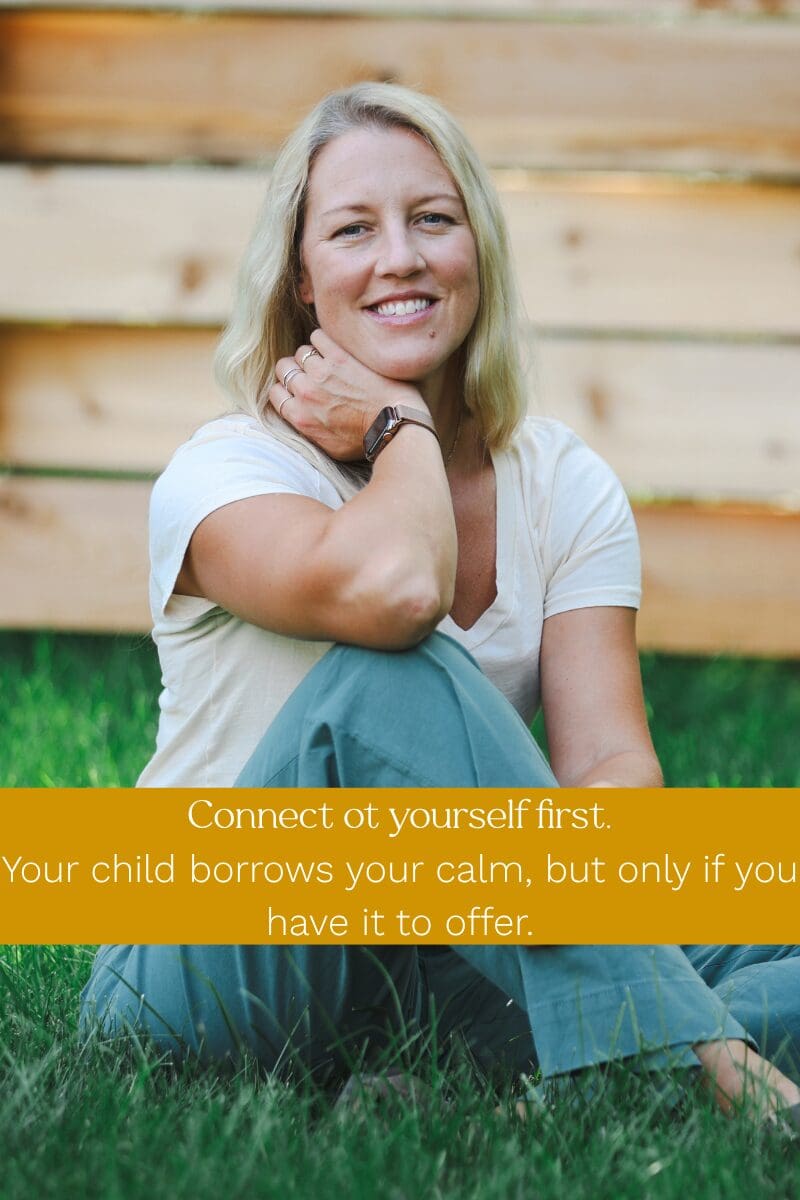
In my CALM Method, the first step is C: Connect to yourself first. Your child borrows your calm, but only if you have it to offer. Predictable routines create conditions where your nervous system isn’t constantly scanning either. They give you the groundedness that makes everything else in CALM possible.
Three Anchors to Build From
You don’t need a color-coded schedule. You don’t need a perfect system. Start with three anchors.
1. A consistent morning sequence.
Even 15 to 20 minutes of predictable order (same steps, same pace, same breakfast if possible) tells the nervous system the day is safe before it has really begun. You’re not optimizing your morning. You’re setting a tone in your child’s body.
2. A transition signal before every shift.
“Five more minutes, then we brush teeth” isn’t just about time management. It’s a preview. Previews reduce the threat response that fires when something unexpected ends or changes. The signal is the regulation.
3. A bedtime rhythm, not just a bedtime.
Same steps, same order, every night. The actual time can flex when life requires it. The sequence shouldn’t. Same books, same lamp, same song or conversation. The rhythm is the message: the day is over, you’re safe, sleep is coming.
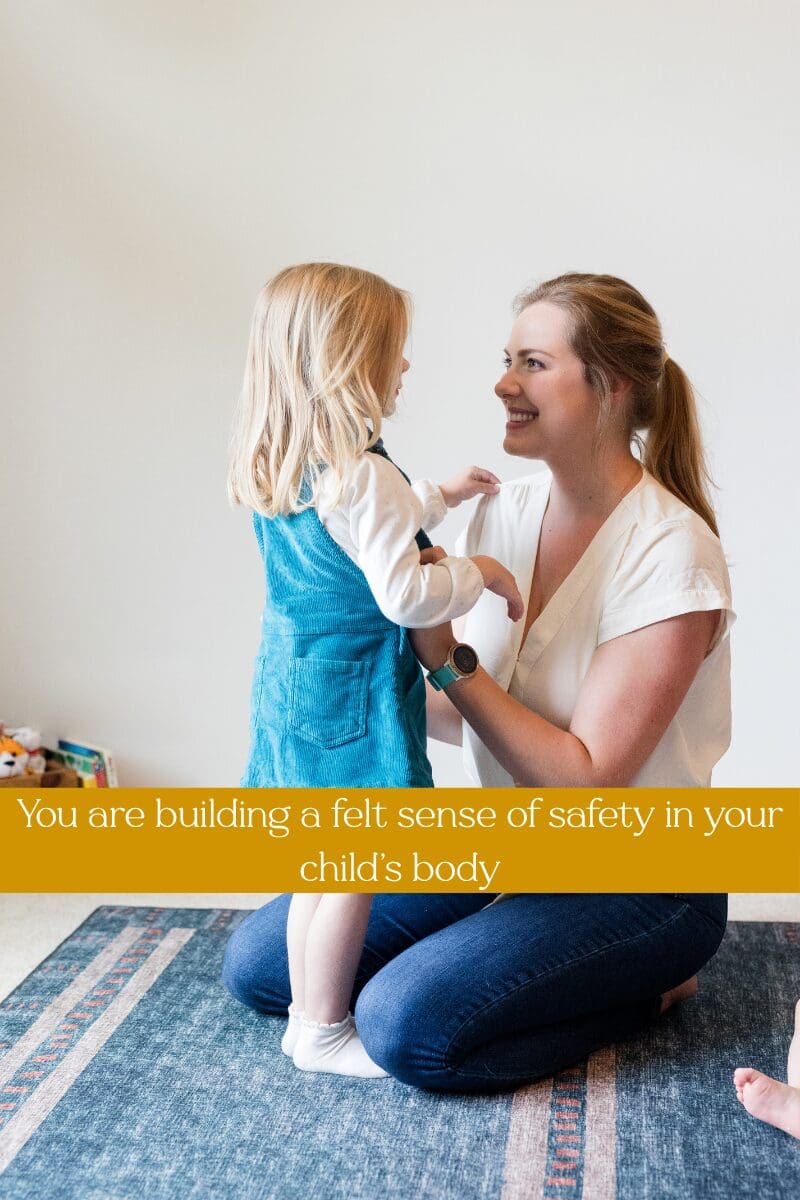
| These three anchors, held consistently, do more for your child’s regulation (and yours) than any curated activity. You are not building a schedule. You are building a felt sense of safety in your child’s body. |
A Note on Perfectionism
You don’t have to be perfect. The science doesn’t support perfection. It supports good enough, often enough.
One anchor, held consistently, matters more than an elaborate system held occasionally. Your child’s nervous system isn’t grading your schedule. It’s scanning for repetition, for familiarity, for the pattern it can trust.
You can give them that. Starting today. With whatever ordinary morning you already have.
You don’t have to do more. You have to do the same thing, more reliably. That’s it. That’s the work.
Your child’s nervous system isn’t looking for a performance. It’s looking for a pattern. And you can give them that.

If you’re ready to build a family rhythm that actually holds, and figure out why your current attempts keep falling apart, I’d love to support you.
Book a Free 30-Minute Consult (no pressure, just real conversation)
Curious about CALM? Grab my free guide: Chaos to Cooperation – The CALM Method , four simple steps to begin showing up differently, starting today.


